Learning by doing
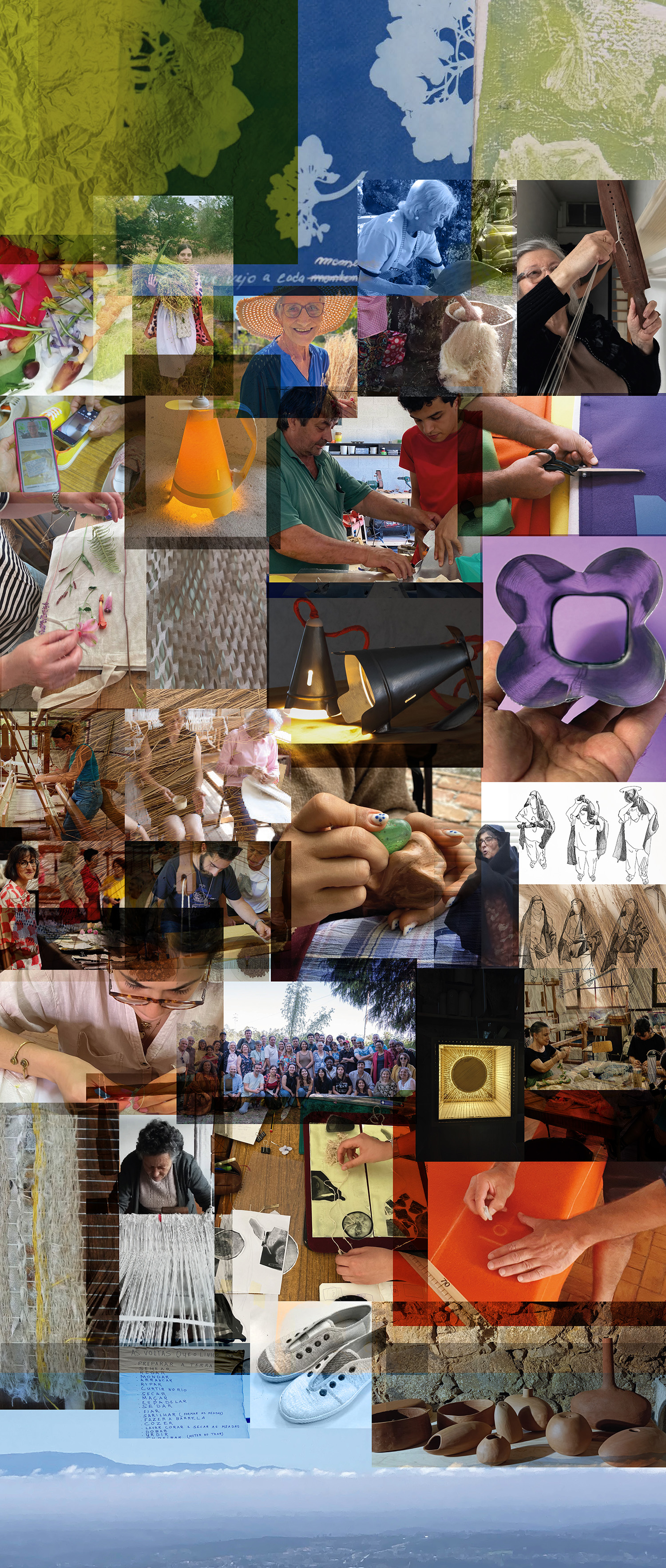
Direct experience with materials, tools, people and situations is central to learning.
UA.LABDESIGN 4.0UNIVERSITY IN THE VILLAGES
SITUATED DESIGN LABORATORY
5—6 SEP 2026
University in the Villages
UA.LABDESIGN — University in the Villages / Situated Design Laboratory — brings together pedagogical practice, research and community engagement through immersion in real contexts and collaboration with local knowledge.
The proposal is not to take ready-made knowledge from the University to the village. It seeks to create a mutual exchange between academic knowledge, tacit knowledge, material experience and the culture of places.
The territory is neither a backdrop nor a simple object of study: it takes part in the production of knowledge.
Purpose · mission · values
UA.LABDESIGN brings university and territory closer without erasing the differences between the forms of knowledge found there. Learning happens through contact with people, materials, tools, rhythms and concrete situations.
Research and design develop from these relationships, with autonomy, responsibility and awareness of the effects of one’s own work.
Direct experience with materials, tools, people and situations is central to learning.
Academic knowledge, practical knowledge and local experience enter into a relationship of mutual learning.
Each participant develops their own voice and assumes responsibility for their choices and relationships.
Working means caring for people, places, materials and the effects of what is made.
Students, lecturers, researchers, craftspeople, masters and residents learn together.
An unsuccessful attempt can produce knowledge when it is understood and documented.
We make the authorship, provenance, knowledge and transformations of each process legible.
The residency connects earlier processes with relationships and projects that may continue beyond the week.
Situated knowledge can support fair local cultural, social and economic continuity.
UA.LABDESIGN · Fourth edition
A confluence occurs when distinct paths meet without ceasing to be distinct.
We create conditions for encounters between people, generations and forms of knowledge; between university and territory; between academic and practical knowledge; between materials, techniques and technologies; and between memory, present experience and future possibilities.
The workshops begin in different places and practices but do not operate as isolated units. A project may begin in clay and encounter graphic or digital practice; flax may enter into dialogue with basketry; the documentation of one process may become material for another project.
The CULTURALITY RURAL EVENT is the moment of opening and returning to the territory: it makes public the processes, discoveries, relationships and questions about what deserves to continue beyond the residency.
5 and 6 September 2026 · Múceres, Tondela
Departure from “Bar da Esmeralda” (Café do Arco), ending at AmaCastelões.
Exhibition of 18 project posters created by second-year students of the Bachelor’s Degree in Design at the University of Aveiro, as part of the Project in Design III course unit during the 2025/2026 academic year. The projects were developed in collaboration with basket maker Fausto Dinis.
Vale do Homem.
Vale do Homem.
Processes developed in the UA.LABDESIGN 4.0 workshops, in connection with the activities of the European CULTURALITY project.
Vale do Homem.
Programme subject to change.
Places · practices · projects
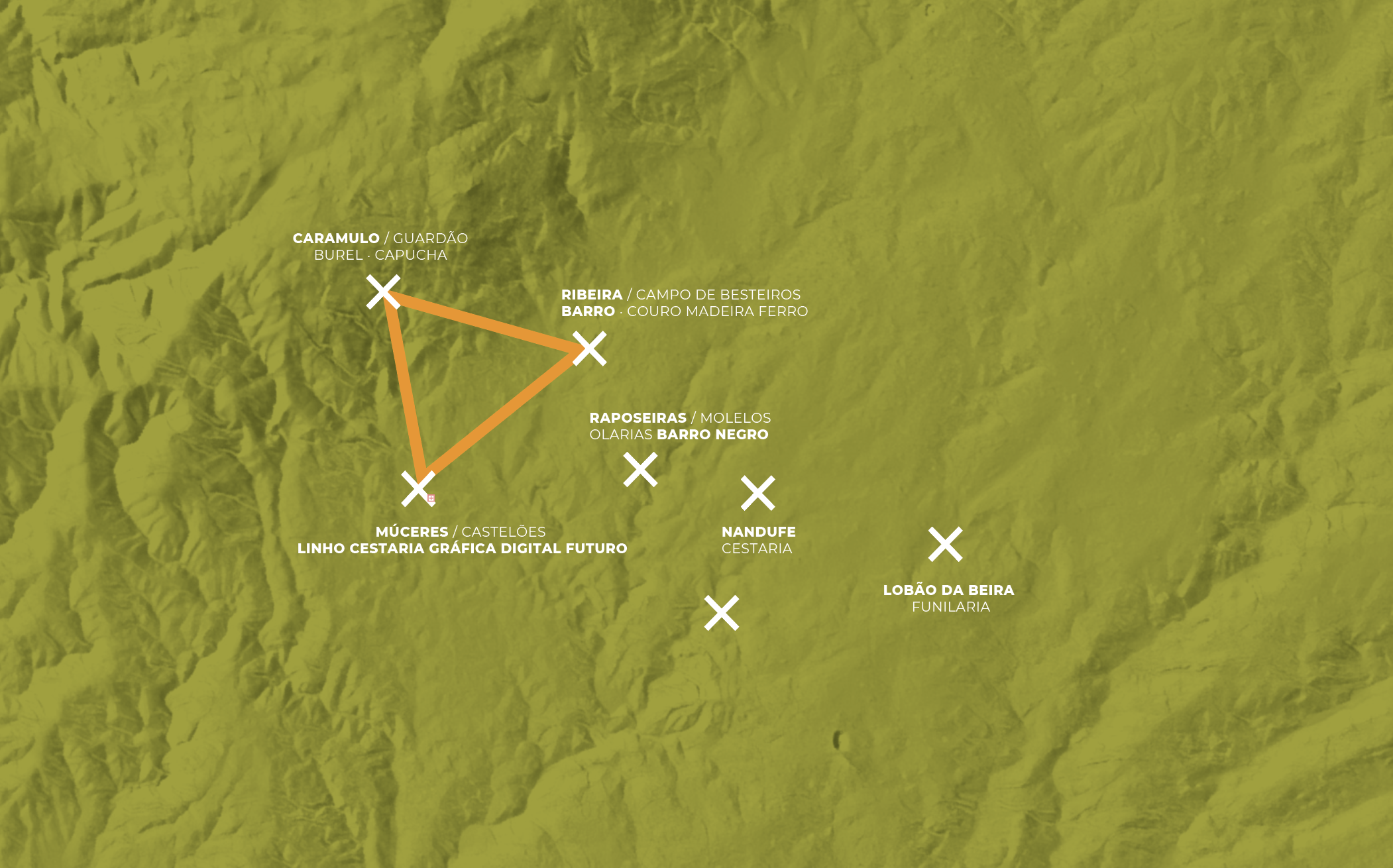
Three territorial hubs and three cross-cutting workshops. Each place brings its own relationships, histories, material conditions and people.
Territorial hub 01
The workshops at Casa de Cima and Casa de Baixo bring together crafts, digital practice, the Graphic Workshop and the Future Workshop. In this edition, basketry is the main field of work, with the participation of Fausto Dinis, a basket maker from Nandufe. The process begins with materials, tools and basic structures and evolves through practice towards construction, correction and criteria of quality.
Territorial hub 02
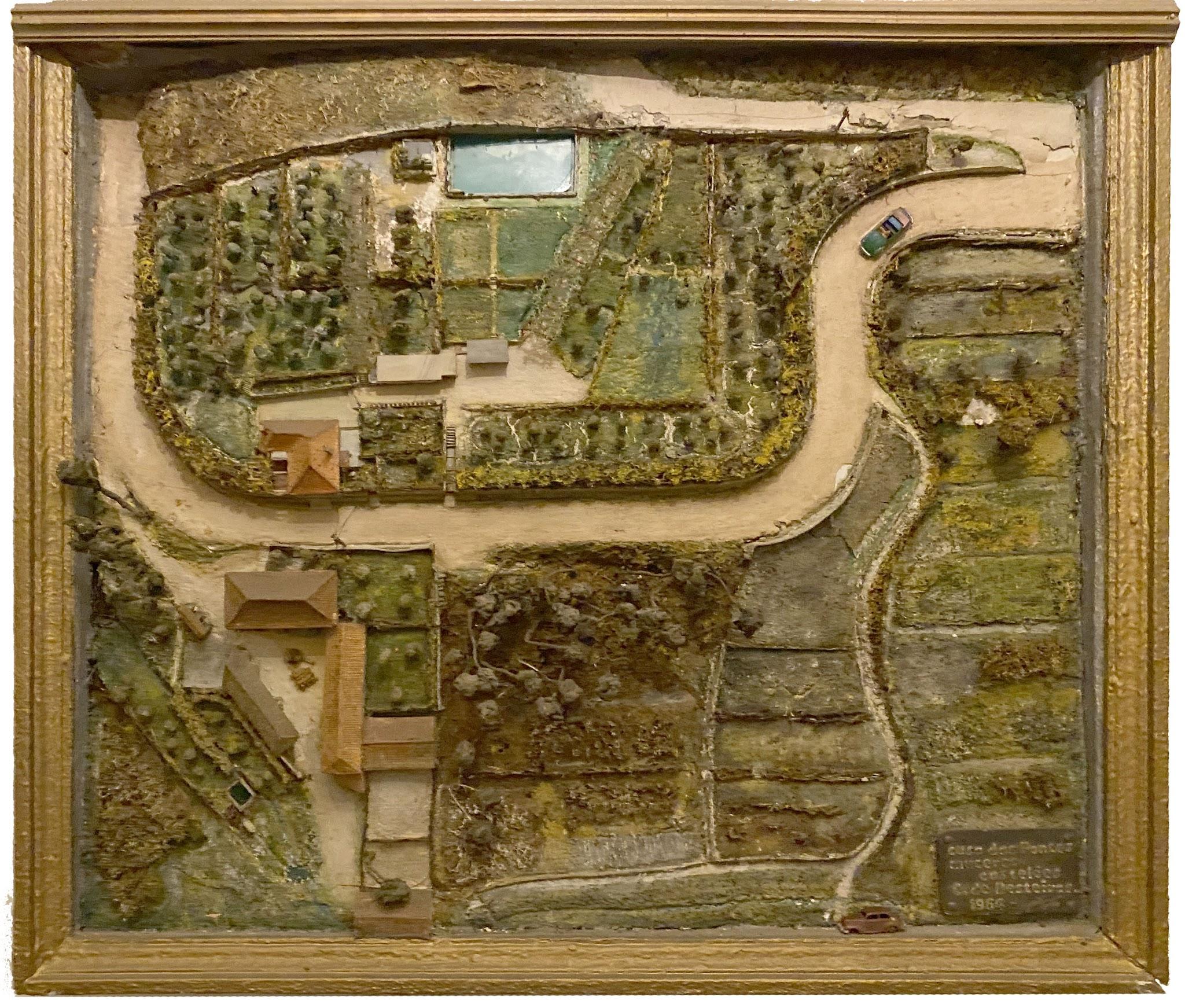
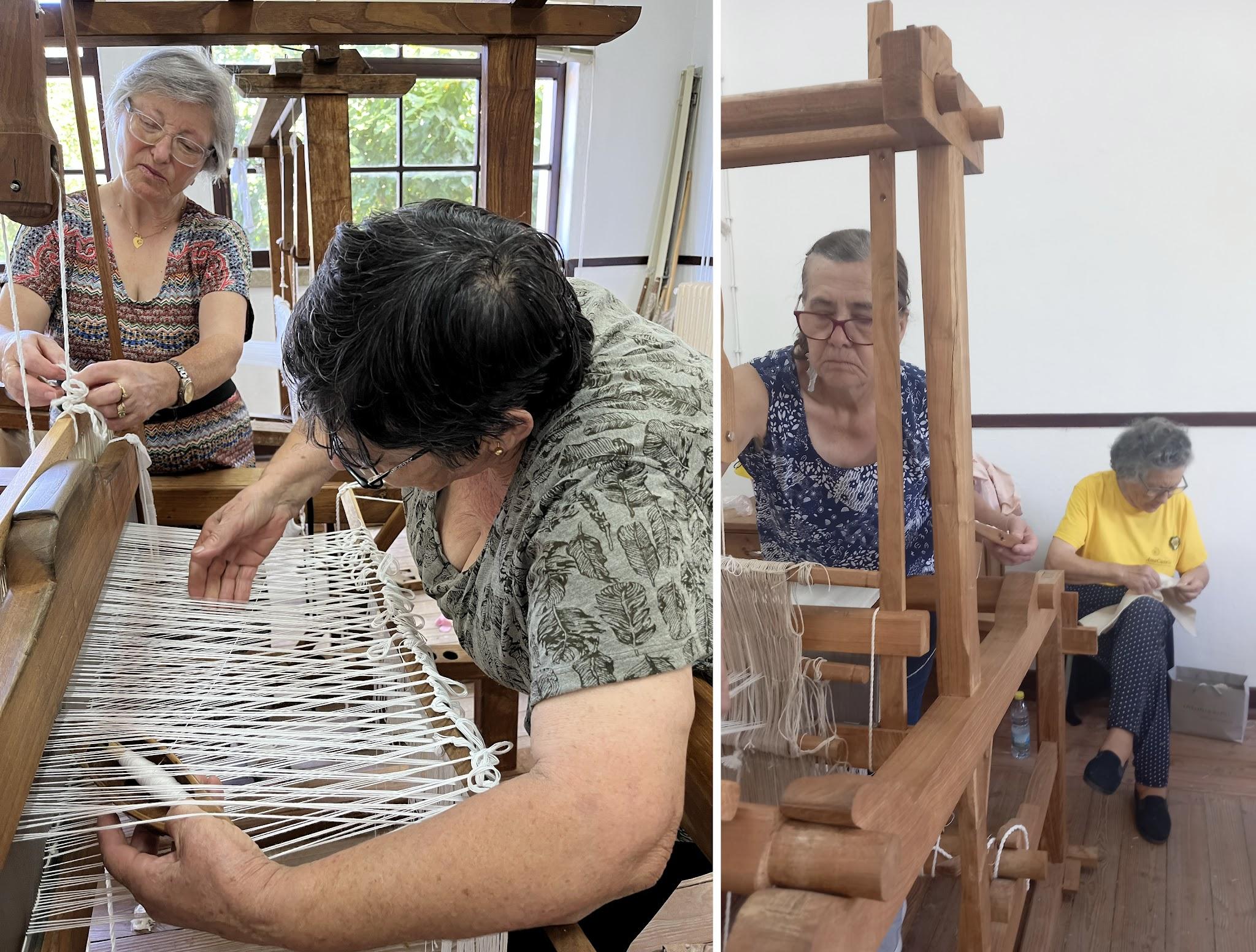
Learning grows from contact with the Flax Cycle, the craftswomen, the material, the looms and local productive memory. Experiments may connect with the other workshops, sharing knowledge, materials and processes.
Territorial hub 03
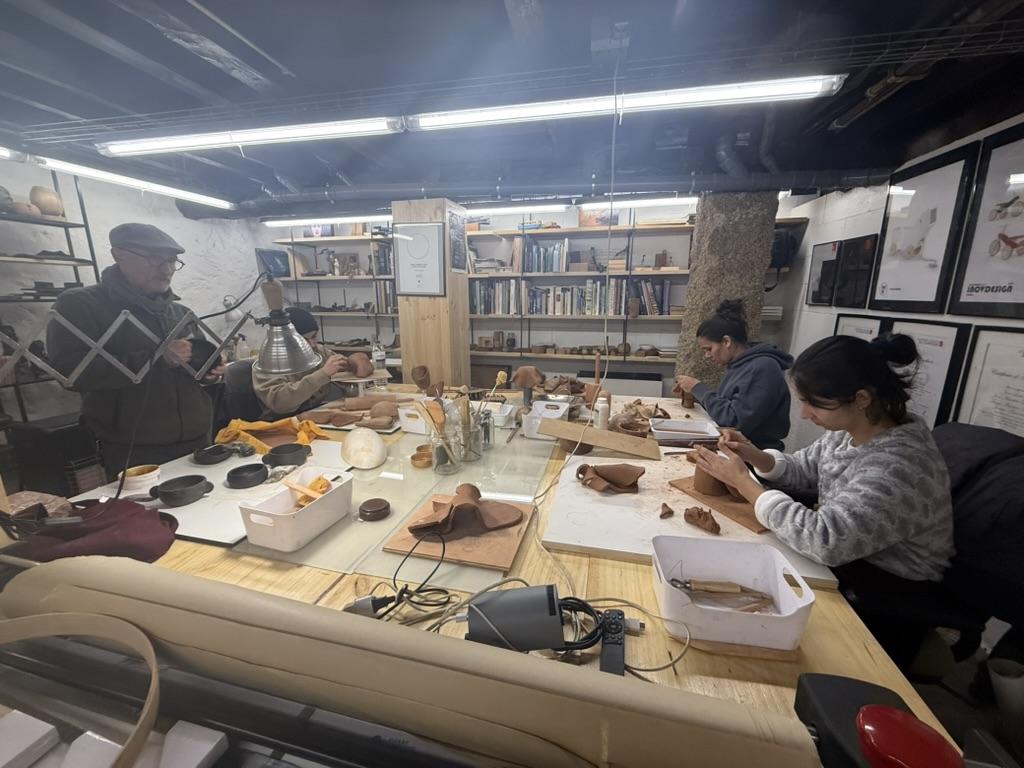
A hub for material and productive experimentation where learning, prototyping, development and production meet. In 2026, clay has a particular presence, in possible relation with wood, leather and other processes.
Cross-cutting workshops
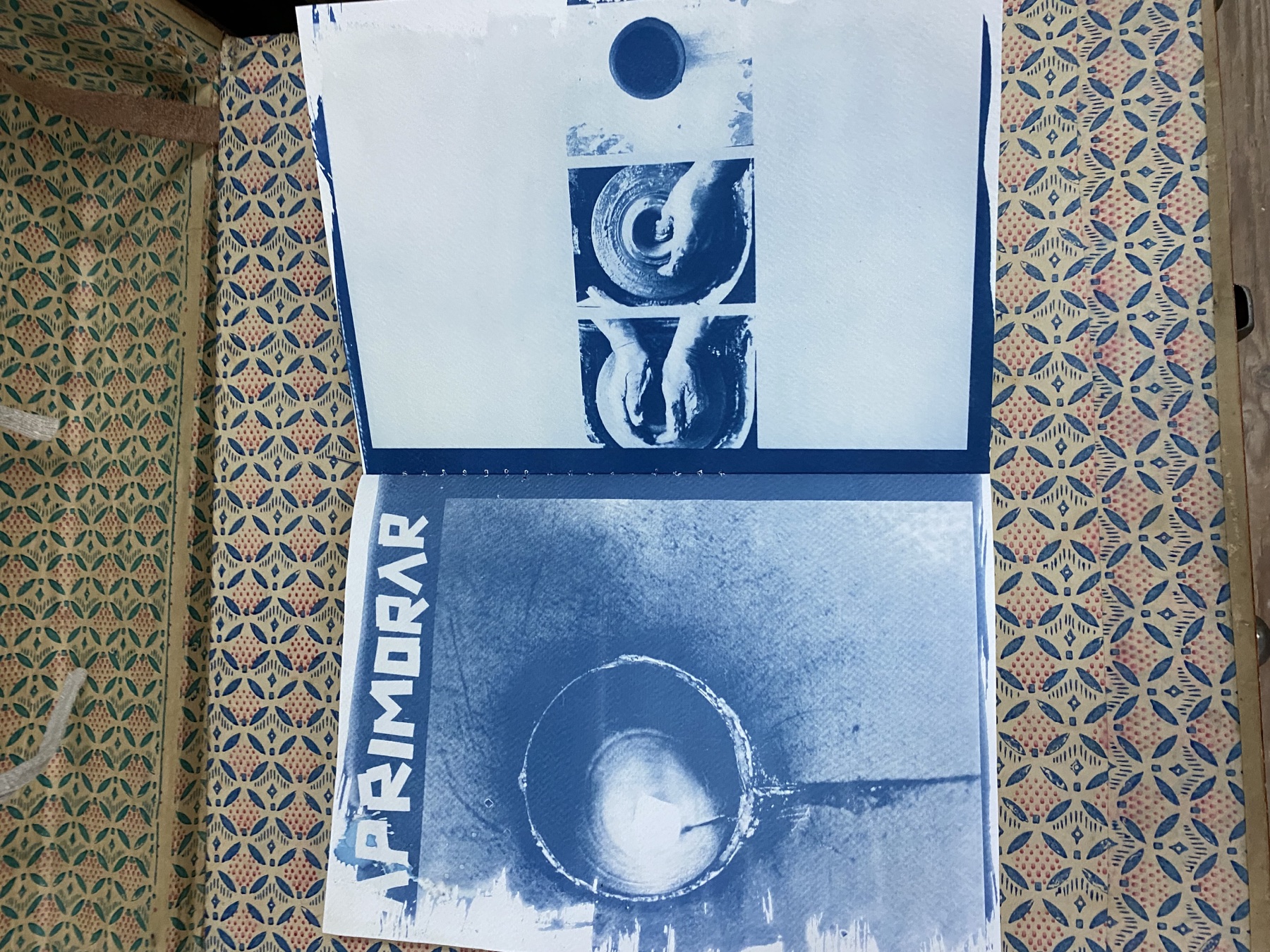
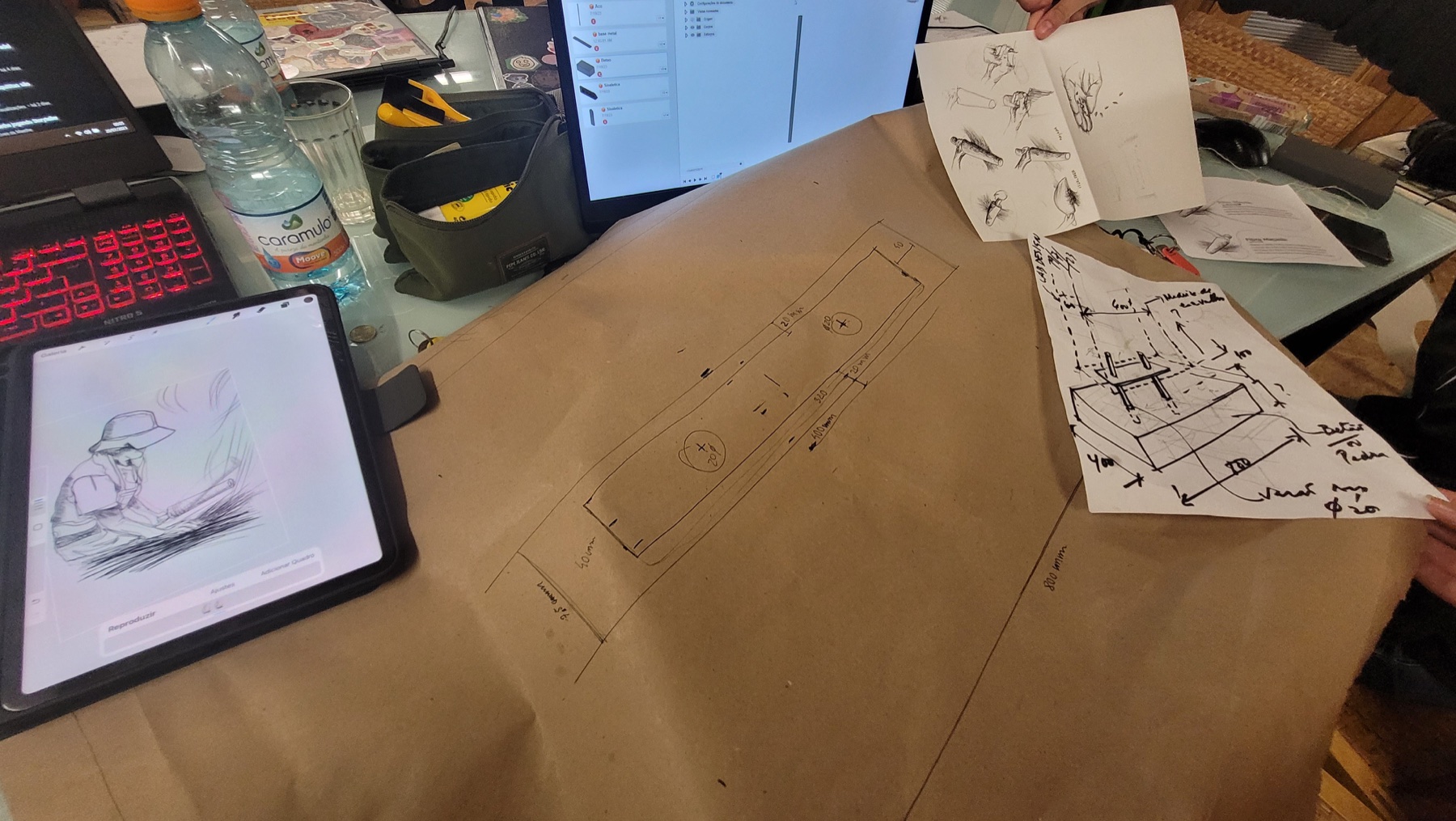
It gathers, selects, orders and relates images, words, records and materials from the week. Editing makes knowledge, processes and relationships legible and contributes to the UA.LABDESIGN Passport.
Cross-cutting workshops
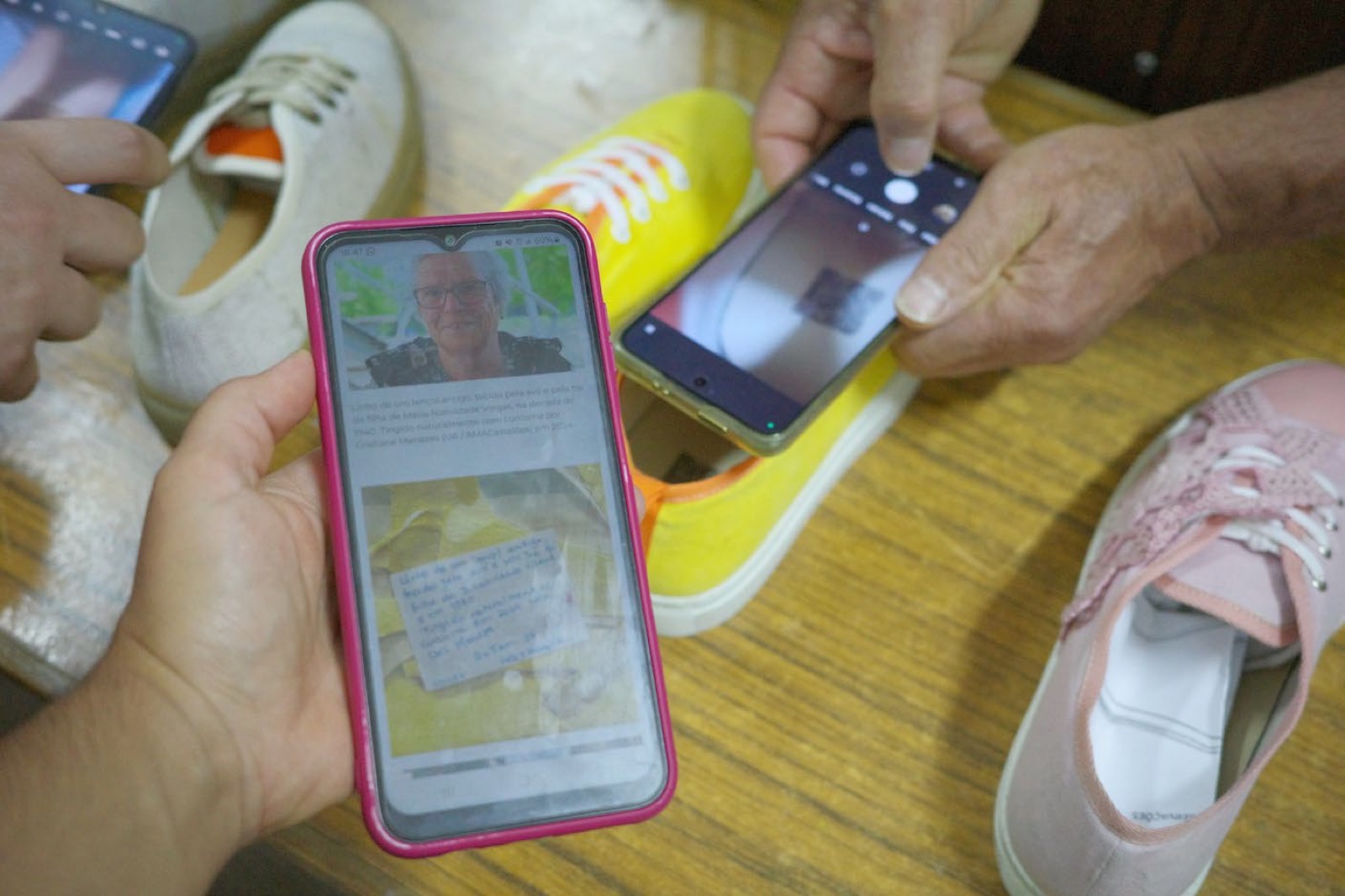
It explores how technology can amplify or mediate relationships between people, materials, gestures, objects and territory without replacing the material experience from which they emerge.
Cross-cutting workshops
A space for metadesign, reflection, curation and continuity. It asks what deserves to remain, how it should be documented and how it might be activated again.
How the workshops meet
Each participant develops a main hub and recognises when another form of knowledge, another workshop or another person can positively transform that work.
Crossings are deliberately sought. One workshop may pose a question to another, request a specific skill or offer material for a new experiment.
Residency · 30 August—6 September
The residency is a shared experience. Workshops, meals, journeys, conversations and moments of exchange are all part of the laboratory.
Sunday · 30 Aug
Monday · 31 Aug
Tuesday · 1 Sep
Wednesday · 2 Sep
Thursday · 3 Sep
Friday · 4 Sep
Saturday · 5 Sep
Sunday · 6 Sep
Document · select · share
Documenting does not mean recording everything. What matters is recognising what helps us understand a process: a decision, a gesture, a tool, a transformation of matter, a conversation or a failed attempt that produced learning.
Documentation feeds the public presentation at the CULTURALITY RURAL EVENT and the living archive of UA.LABDESIGN. The Graphic and Digital workshops have a particular role, but the responsibility for observing, identifying and contextualising is shared by everyone.